৫ কার্তিক ১৪৩৩



Al Jazeera Report
Bangladesh’s Jamaat-e-Islami Sees Historic Chance to Lead Government for First Time
22 January 2026 05:01 AM
NEWS DESK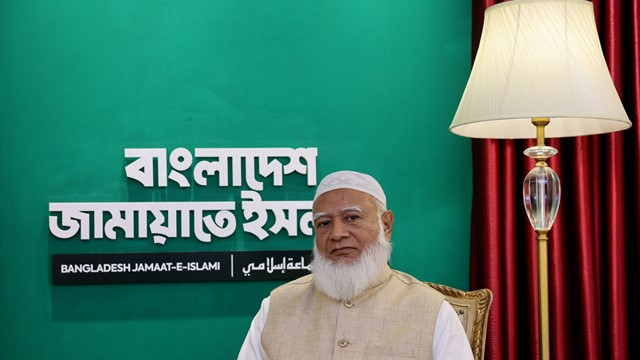
Bangladesh’s largest Islamist party, Jamaat-e-Islami, believes it has a strong chance— for the first time in the country’s history—of coming to state power as the leading force of an electoral alliance.
Ahead of the general election scheduled for 12 February, the party finds itself facing what many describe as the biggest political opportunity in its history. This will be the first national election since the fall of Sheikh Hasina’s government following a student-led mass uprising in August 2024.
With the Awami League banned from participating by the interim government led by Dr Muhammad Yunus, the election has effectively become a two-way contest. According to an Al Jazeera report, Jamaat has emerged as the main challenger to the frontrunner, the Bangladesh Nationalist Party (BNP), through a newly formed electoral alliance that includes the National Citizen Party (NCP) and several other Islamist groups.
Recent opinion polls have further boosted Jamaat’s confidence. A survey conducted last December by the US-based International Republican Institute (IRI) showed BNP enjoying 33 percent public support, with Jamaat close behind at 29 percent.
More recent joint polls by several Bangladeshi research organisations show the gap narrowing further, with BNP at 34.7 percent and Jamaat at 33.6 percent.
Political analysts say a Jamaat victory would mark a dramatic comeback for a party that endured severe repression over the past 15 years. During that period, many of its top leaders were executed or imprisoned on charges of crimes against humanity.
Founded in 1941 by Syed Abul Ala Maududi, Jamaat opposed Bangladesh’s 1971 Liberation War, a stance that continues to provoke deep resentment among large sections of the population. However, current party leaders argue that years of persecution have generated public sympathy in their favour.
Jamaat’s deputy ameer, Dr Syed Abdullah Mohammad Taher, told Al Jazeera that Bangladeshis have experienced governance by both the Awami League and BNP for more than five decades and are now seeking an alternative political force. Jamaat is presenting itself as a “moderate Islamist party” and, for the first time, has nominated a Hindu candidate—Krishna Nandi in Khulna—widely seen as a strategic move to attract non-Muslim voters.
Despite this repositioning, the prospect of Jamaat coming to power has sparked concern both domestically and internationally. Critics fear that an Islamist government could introduce Sharia law or curtail the rights of women and minorities. Jamaat leaders, however, insist they will pursue reforms within the framework of Bangladesh’s existing secular constitution.
According to Thomas Kean, senior consultant at the International Crisis Group, a Jamaat-led government could face challenges in relations with India, particularly due to ideological differences with India’s BJP-led government. On the other hand, Bangladesh’s improving ties with Pakistan since the political shift in August could work in Jamaat’s favour.
Organisationally, Jamaat is considered highly disciplined and well-structured. Its student wing, Islami Chhatra Shibir, has recently secured major victories in student union elections across leading university campuses.
Party leaders claim Jamaat has around 20 million supporters and 250,000 registered members, known as rukons. Analysts say the upcoming election is more than just a vote—it is an acid test of whether a long-controversial party can convert organisational resilience into national legitimacy.
The 12 February election will ultimately determine whether Jamaat-e-Islami can transform decades of political endurance into state power for the first time in Bangladesh’s history.