১০ কার্তিক ১৪৩৩



Tareque Rahman’s Remarkable Rise in Global Media : Curiosity Grows Over “I Have a Plan”
27 December 2025 07:12 AM
NEWS DESK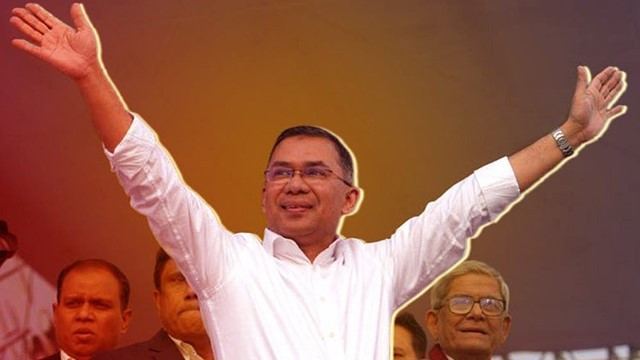
BNP Acting Chairman Tareque Rahman has returned to Bangladesh after 17 years in exile, immediately becoming a focal point of both domestic and international political attention.
His return on Thursday has triggered significant reactions not only within Bangladesh’s political landscape but also across global media. Particular attention has been drawn to his speech titled “I Have a Plan”, delivered before a massive public gathering at the 300 Feet (36 July Expressway) area of Dhaka, which has sparked widespread curiosity among international observers.
Leading global news outlets have described Rahman’s return as “historic” and a “game changer.” Many reports have portrayed the development as a positive step toward political stability, democratic revival, national unity, and peace in Bangladesh. Several international analyses note that at a time when extremist and authoritarian groups are allegedly attempting to disrupt the upcoming election and destabilize the country, the return of the acting chairman of Bangladesh’s largest political party has been seen as a source of renewed hope.
Reuters and Al Jazeera reported that the BNP appears more united under Rahman’s direct leadership. Analysts quoted by the outlets suggested that the end of prolonged political uncertainty and the re-emergence of a strong opposition leader could contribute to restoring stability. Al Jazeera referred to Rahman as Bangladesh’s “most powerful opposition leader” and broadcast live coverage of his return, describing him as the heir to a long-standing political dynasty.
BBC and AFP reported that the return of the main opposition leader after 17 years has helped create conditions for a competitive and participatory election—considered essential for democratic restoration. The BBC headlined its report as, “Front-runner to be Bangladesh’s next prime minister returns after 17 years in exile,” noting that the development could shift the balance of power in South Asian politics. Reuters similarly wrote, “Bangladesh prime minister hopeful returns from exile ahead of election.”
Indian and international media outlets, including The Times of India and Daily Sabah, praised Rahman’s call for an “inclusive Bangladesh.” His emphasis on equal rights for Hindus, Muslims, Buddhists, Christians, and all communities has received positive international attention. Reuters highlighted Rahman’s pledge of “no revenge, only rule of law,” noting that it helped ease public fears and sent a message of peace.
Indian outlets such as NDTV and The Times of India have focused on the potential implications for Bangladesh–India relations. Analysts suggested that Rahman’s statement about prioritizing “national interest above all” signals a balanced and long-term diplomatic approach with neighboring countries. One headline quoted his speech as, “I Have a Plan: BNP’s Tareque Rahman invokes Martin Luther King Jr. after returning to Bangladesh following 17 years in exile.”
The Hindu wrote, “Zia’s son returns home as BNP banks on him to win the election,” highlighting his central role in the party’s future.
Rahman’s secular and moderate political stance has led to growing confidence among regional and international observers that his leadership could help curb extremism in Bangladesh. His statement, “I want to build a Bangladesh where a mother feels safe about her child’s future,” was highlighted by both Al Jazeera and The Hindu as reflecting a human-centered political vision.
NDTV’s analysis suggested that Rahman’s plan extends beyond election politics, focusing on structural reforms and a broader “Bangladesh First” policy framework. His emphasis on national interest in foreign relations has drawn particular international attention.
Meanwhile, India Today published a special analysis describing Rahman’s return as potentially reassuring for New Delhi. The outlet noted concerns in India over rising anti-India sentiment and extremist activity during the tenure of the interim government led by Dr. Muhammad Yunus. In this context, Rahman’s return is seen as revitalizing BNP’s grassroots support and contributing to democratic stability. With Bangladesh’s general election scheduled for February, Indian analysts consider the vote critical not only for Bangladesh but also for regional security—especially following the fall of Sheikh Hasina’s government, the Awami League’s effective absence from electoral politics, and Khaleda Zia’s illness.
“I Have a Plan”: What Is the Plan?
Rahman’s reference to Martin Luther King Jr.’s iconic “I Have a Dream” speech—when he declared, “I have a plan for the people of my country, for my country”—has fueled intense speculation among international analysts about the substance of his proposed roadmap.
Political observers believe that the extensive global media coverage reflects the international image Rahman has cultivated over recent years while in London. South Asia experts suggest that his vision for restoring stability and democracy in Bangladesh has become a subject of growing interest among major global powers.
Reports by Reuters and AP highlighted the presence of millions of supporters from the airport to the rally venue, noting the discipline and scale of the gathering despite BNP being out of power for over a decade. Media outlets also gave prominence to the symbolic moment when Rahman stepped barefoot onto Bangladeshi soil and touched the ground upon arrival.
Indian media, in particular, have continued to analyze the implications of Rahman’s “Bangladesh First” policy and how his return could shape future Bangladesh–India relations.