২২ আশ্বিন ১৪৩৩



Trump Signs New 10% Global Tariff Order
22 February 2026 09:02 AM
NEWS DESK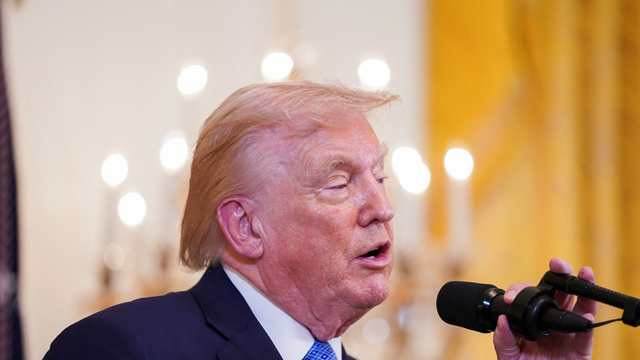
The Supreme Court of the United States has declared President Donald Trump’s decision to impose varying tariff rates on different countries unlawful, ruling that he violated federal law by unilaterally enforcing sweeping global tariffs.
In its judgment, the court said such measures could have serious implications for US foreign policy and the economy. However, within hours of the ruling, Trump announced that he had signed a new executive order imposing a 10 percent global tariff.
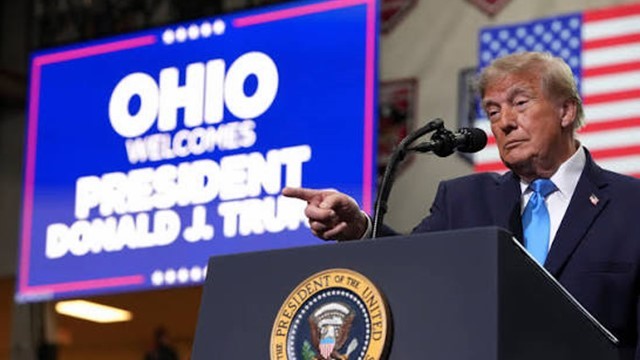
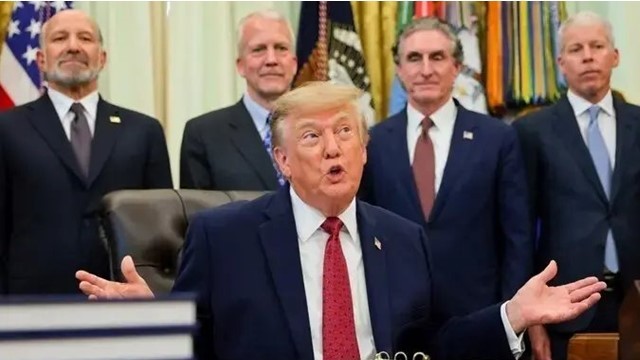
In a post on social media, Trump said he signed the order in the Oval Office and that it would take effect almost immediately, with the new tariffs scheduled to begin on Tuesday.
Following the court’s decision, Wall Street reacted positively. On the same day, Trump invoked “Section 122,” a rarely used legal provision, to impose the new 10 percent tariff.
Under Section 122, the president is authorized to impose tariffs of up to 15 percent for a maximum of 150 days. During that period, Congress is required to take action.
The new executive order exempts certain minerals, natural resources, fertilizers, agricultural products such as oranges and beef, pharmaceuticals, electronics, and specific vehicles. However, the list of exemptions remains unclear in several areas.
Most goods from Canada and Mexico covered under the United States–Mexico–Canada Agreement (USMCA) will be exempted. A White House official said that even countries that already have trade agreements with the United States will be subject to the new 10 percent global tariff, paying duties under Section 122 rather than the rates set in their trade deals.
The ruling is being seen as a major victory for several states and business groups that had challenged Trump’s tariff policy in court. It also raises the possibility that billions of dollars collected under the International Emergency Economic Powers Act (IEEPA) could be refunded.
At the same time, the decision has created fresh uncertainty in global trade.
Speaking at the White House, Trump suggested that the court’s ruling does not mean tariff revenues would automatically be returned. He indicated that the matter would likely face a prolonged legal battle that could take years to resolve.
Trump also said he has other legal tools available to enforce tariffs, arguing that such measures help boost investment and manufacturing in the United States.
The ruling against Trump’s tariff policy was supported by six justices, including Chief Justice John Roberts. The majority included three liberal justices as well as two Trump appointees — Amy Coney Barrett and Neil Gorsuch. Three conservative justices — Clarence Thomas, Brett Kavanaugh, and Samuel Alito — dissented.
After the ruling, Trump said at the White House that he was “very disappointed” that judges appointed by a Republican president voted against his tariff policy. He described them as “foolish and weak” and accused them of lacking patriotism.
In the majority opinion, Chief Justice Roberts wrote that under the Constitution, the power to levy taxes and duties rests with Congress, not the president. He stated that extraordinary powers such as imposing tariffs require clear congressional authorization — something Trump failed to demonstrate.
The court further noted that although the IEEPA contains terms such as “regulate” and “import,” it does not grant the president unlimited authority to impose tariffs of any rate on any country for an indefinite period.
During the hearing, lawyers representing the plaintiff states and small businesses argued that the law under which the tariffs were imposed does not even mention the word “tariff.” They contended that Congress never intended to delegate its taxing authority to the president — a view Roberts echoed in his opinion.
Trump claimed that foreign governments, which he said had taken advantage of the United States for years, were celebrating the ruling. However, he warned that their celebration would be short-lived.
After the decision, US stock markets rose, with the S&P 500 index closing up about 0.7 percent. Nevertheless, it remains uncertain whether expectations of tariff refunds and cost relief will materialize in practice.