১৪ শ্রাবণ ১৪৩৩


White House Divisions Shape Trump’s Shifting Messages on Iran War
15 March 2026 01:03 AM
NEWS DESK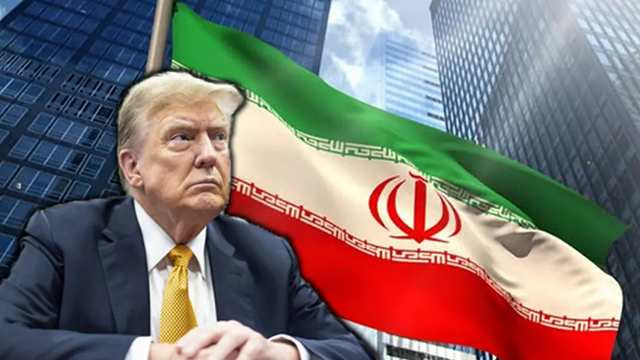
Internal tensions inside the White House are influencing US President Donald Trump’s changing public statements about the course of the war with Iran. As the conflict spreads across the Middle East, his advisers are debating when and how to declare victory.
According to one Trump adviser and several others familiar with the discussions, some officials are warning that a sudden rise in gasoline prices could create political costs for the United States if attacks on Iran continue alongside Israel. Others, however, are urging the administration to maintain pressure and continue the military campaign against the Islamic Republic.
These accounts reveal previously undisclosed details of the White House decision-making process and highlight the risks facing Trump. After returning to power last year promising to avoid what he called “foolish” military interventions, he has now led the United States into a war that has shaken global markets and disrupted international oil trade.
Competition among advisers to influence Trump has long been a feature of his presidency, but this time the stakes involve decisions about war and peace. When the war began on February 28, Trump outlined broad objectives. In recent days, however, he has emphasized that the operation is limited and that most of its military goals have already been achieved.
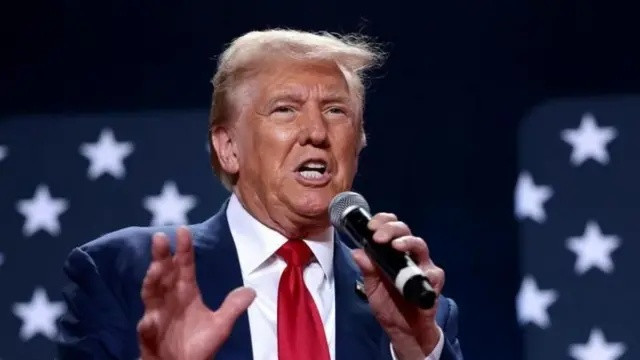
The message has remained unclear to many observers, including energy markets. Trump’s shifting remarks have contributed to volatility in oil prices. Speaking at a campaign rally in Kentucky on Wednesday, he first said, “We have won the war,” before changing tone moments later and asking, “Do we want to leave early? We have to finish the job.”
Economic advisers, including officials from the US Treasury Department and the National Economic Council, have warned Trump that spikes in oil prices and gasoline costs could quickly erode already fragile public support for the war. Political advisers are making similar arguments.
White House Chief of Staff Susie Wiles and her deputy James Blair have reportedly highlighted the political risks of rising energy prices, encouraging Trump to define victory narrowly and signal that the operation may soon conclude.
At the same time, some Republican leaders are pushing for a tougher approach. Among them are Senators Lindsey Graham and Tom Cotton, as well as conservative media personality Mark Levin. They argue that strong action is necessary to prevent Iran from obtaining nuclear weapons and to respond to attacks on US forces and ships.
A third pressure group comes from within Trump’s own political base. Strategist Steve Bannon and right-wing television commentator Tucker Carlson have publicly and privately urged him to avoid becoming entangled in a prolonged Middle East conflict.
One Trump adviser described the balancing act this way: “He’s letting the hawks believe the campaign continues, trying to reassure markets that the war could end quickly, and telling his supporters that escalation will remain limited.”
Asked about the report, White House Press Secretary Karoline Leavitt dismissed it as speculation based on anonymous sources who were not present in discussions with the president. She said Trump listens to a wide range of opinions but ultimately makes the decisions himself.
Although Trump’s messaging about the war has sometimes been inconsistent, he has repeatedly described the conflict this week as a “short-term operation.” According to a person familiar with the discussions, the phrase emerged during a White House briefing and was first used by Trump during a meeting with Republican lawmakers in Miami.
Before that speech, Trump reportedly received a messaging document advising him to emphasize that the war would be brief and that the United States does not seek a prolonged conflict.
The administration’s stated objectives have also shifted over time—from preventing imminent Iranian attacks, to destroying Iran’s nuclear program, and at times suggesting regime change.
Now, as Trump attempts to move away from an increasingly unpopular conflict, he is managing competing narratives while Iran continues attacks near the Strait of Hormuz and in neighboring waters.
Political and economic advisers who previously warned of potential economic shocks are now urging the president to reassure markets and help stabilize oil and gas prices.
Some White House officials are discussing an exit strategy in which Trump would declare that military objectives have been achieved and shift toward sanctions, deterrence, and negotiations. However, not everyone supports this approach.
Nearly 2,000 people have reportedly been killed in US and Israeli airstrikes, including senior Iranian leaders, with some casualties reported as far away as Lebanon. Iran’s ballistic missile arsenal has been heavily damaged, much of its navy has been sunk, and its ability to support armed allies in the region has been weakened.
Trump has said he alone will decide when the operation ends. He and his allies argue that the campaign is progressing much faster than the originally expected four-to-six-week timeline.
Analysts believe Iran’s leadership will likely also claim victory, arguing that the country has survived US-Israeli attacks and demonstrated its ability to retaliate.
The Strait of Hormuz may ultimately play the most decisive role in determining the war’s trajectory. Nearly one-fifth of global oil shipments normally pass through the narrow waterway, but traffic there has largely stalled.
In recent days, Iran has attacked tankers in Iraqi waters and vessels near the strait. If disruptions push gasoline prices sharply higher in the United States, political pressure on Trump to end the war could intensify.
His Republican Party is already fighting to maintain its narrow majority in Congress in the upcoming November midterm elections.
So far, most members of Trump’s “Make America Great Again” movement have backed his position on Iran, although some anti-intervention supporters have voiced criticism.
Trump has also recently stepped back from suggestions that the war aims to overthrow the government in Tehran. US intelligence assessments indicate that Iran’s leadership is not on the verge of collapse.
Some confusion about the war’s trajectory may also stem from expectations shaped by earlier US military successes in Venezuela. According to a source familiar with administration thinking, advisers struggled to convince Trump that the Iran campaign would not unfold as quickly as the January 3 operation that led to the capture of Venezuelan President Nicolás Maduro.
That operation allowed the United States to exert influence over Venezuela’s vast oil resources without a prolonged military presence.
Iran, however, remains a far more powerful and deeply entrenched adversary with a strong religious and security establishment.
A source familiar with US intelligence reports also rejected claims from some Trump supporters that Iran was only weeks away from building a nuclear weapon. Trump had said in June that US-Israeli bombing had “completely destroyed” Iran’s nuclear program.
Much of Iran’s stockpile of highly enriched uranium is believed to have been buried underground during the June attacks. Analysts say it could potentially be recovered and refined again to produce weapons-grade material.
Iran has consistently denied attempting to develop nuclear weapons.




Comments Here: