The United States Centers for Disease Control and Prevention (CDC) said passengers evacuated from the affected vessel may not be placed under mandatory quarantine upon their return to the country.
Speaking on CNN’s State of the Union on Sunday, acting CDC Director Jay Bhattacharya stressed that there was “no reason to panic.”
“This is not COVID,” he said. “We do not need to be alarmed.”
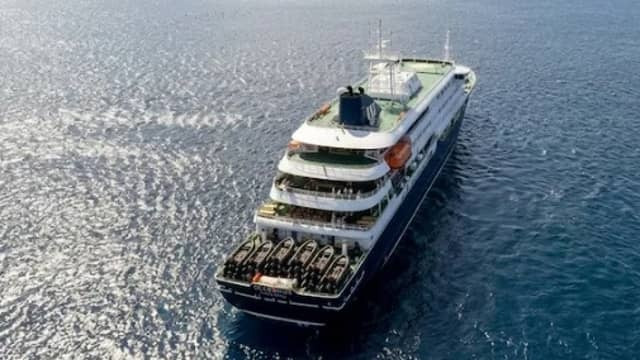
The US government announced on Friday that it would arrange a special flight to evacuate 17 American citizens from the MV Hondias cruise ship, where the hantavirus outbreak has already claimed three lives. Several other passengers have reportedly developed symptoms. The ship is currently located near Spain’s Canary Islands.
According to Bhattacharya, the passengers — none of whom are currently showing symptoms — will be taken to a specialized medical facility in the US state of Nebraska for evaluation. However, he indicated that not all of them would necessarily be quarantined.
“We will speak with them and conduct a risk assessment,” he said. “We will determine whether they had close contact with anyone showing symptoms.”
The Nebraska Medical Center’s biocontainment unit has already been prepared to receive the passengers. Hospital spokesperson Kayla Thomas said the group is expected to arrive in Omaha early Monday morning.
US health officials said some passengers may be allowed to remain in Nebraska temporarily after the risk assessment, while others could return home if their living conditions are deemed safe and do not pose a risk to others.
Bhattacharya added that the passengers would remain under health monitoring for several weeks to ensure that no symptoms develop later. Authorities became especially cautious after seven additional American passengers reportedly developed symptoms after the ship had already departed earlier in the voyage.
According to CDC guidelines, hantavirus is generally considered contagious only after symptoms appear in an infected person.
Bhattacharya noted that the CDC had followed similar protocols during a hantavirus outbreak in 2018, which was successfully contained.
Responding to criticism that health authorities have been too restrained in communicating the risks — especially in the aftermath of the COVID-19 pandemic — Bhattacharya insisted the two situations are fundamentally different.
“If the threat level were higher, we would absolutely respond differently,” he said. “This is not COVID.”