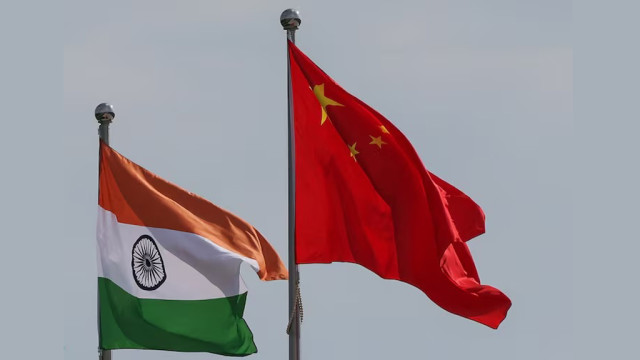
Speaking at a regular press briefing on Monday, Chinese Foreign Ministry spokesperson Mao Ning dismissed India’s criticism over infrastructure development activities in the Shaksgam Valley.
Responding to a question from the Press Trust of India (PTI), Mao said China has every right to carry out development projects within its own territory.
“The area in question is an inseparable part of China,” she stated.
India Rejects China-Pakistan Border Agreement
Last Friday, India’s Ministry of External Affairs claimed that the Shaksgam Valley belongs to India and said New Delhi reserves the right to take all necessary measures to protect its interests.
The Indian government also reiterated that it has never recognized the 1963 “China-Pakistan Boundary Agreement,” describing it as illegal and invalid.
According to the Indian Foreign Ministry, the regions of Jammu & Kashmir and Ladakh are integral parts of India. New Delhi further stated that it has consistently protested against what it described as Chinese attempts to alter the status quo in the Shaksgam Valley.
India also continues to oppose the China-Pakistan Economic Corridor (CPEC), refusing to recognize the initiative.
China Defends CPEC and Border Agreement
In response, Mao Ning said China and Pakistan signed a border agreement in the 1960s and formally demarcated their boundary, adding that sovereign nations have every right to conclude such agreements.
She further described CPEC as an economic cooperation project aimed at improving local livelihoods and promoting socio-economic development.
“Neither the project nor the border agreement changes China’s long-standing position on the Kashmir issue,” Mao added.
Ongoing Border Tensions
India and China have been engaged in a long-running border dispute for decades.
However, in 2024, the two countries reached an important agreement aimed at reducing military tensions along the Himalayan frontier.
The tensions had sharply escalated after a deadly clash between troops from both countries in 2020, in which 20 Indian soldiers and four Chinese soldiers were killed.
Following the 2024 agreement, both sides have attempted to improve relations by resuming direct flights and expanding trade and investment cooperation.
Despite these efforts, disputes over unresolved border areas — including Arunachal Pradesh, which China refers to as “Zangnan” or South Tibet — continue to fuel tensions between the two Asian powers.
India has also repeatedly protested against China’s moves to rename various locations in Arunachal Pradesh.