১২ আশ্বিন ১৪৩৩



Trump Repeats Claim of U.S. Control Over Strait of Hormuz Amid Ongoing Regional Tensions
14 August 2026 06:08 AM
NEWS DESK
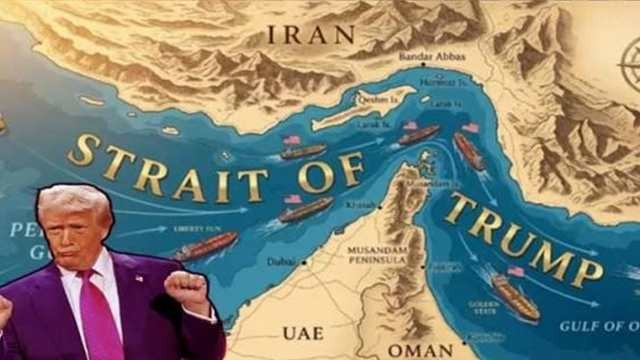
U.S. President Donald Trump has again claimed that the United States has "complete control" over the Strait of Hormuz, as tensions continue to disrupt shipping through one of the world's most strategically important maritime routes.
In a post on the social media platform Truth Social on Wednesday, Trump wrote that the United States had secured full control of the waterway and expressed confidence that it would maintain that position.
"We have complete control over the Strait of Hormuz," Trump wrote. "I think we will keep it."
Trump had made a similar assertion during remarks to reporters on Tuesday.
In the same post, the president praised the U.S. naval blockade around Iranian ports, describing it as a "steel wall" that Iran was unable to overcome.
He also sharply criticized Iran's military capabilities, claiming the country no longer possessed an effective navy or air force, that remaining military personnel were not being paid, and that the Islamic Revolutionary Guard Corps (IRGC) had been largely dismantled. Trump further claimed Iran's leadership was unstable and that the country was suffering from severe economic difficulties, including soaring inflation.
Ending his post, Trump wrote, "All praise is due to Allah."
Despite Trump's claims, commercial shipping through the Strait of Hormuz remains significantly reduced. Iran continues to insist it retains influence over the strategic waterway and is reportedly holding discussions with Oman regarding its future management.
Tehran has maintained that normal maritime traffic will not resume until the United States lifts its naval blockade, removes sanctions, and releases Iranian assets that have been frozen abroad.
Although the strait has not been completely closed, commercial vessels continue to face heightened security risks and operational restrictions, contributing to a sharp decline in shipping traffic.
According to Reuters, only eight ships transited the Strait of Hormuz on Tuesday, compared with approximately 130 to 140 vessels per day before the conflict escalated. Shipping analytics firm Kpler reported that Tuesday's figure was also below the previous 10-day average of around 12 vessels.
Tensions have also spread to another critical maritime chokepoint, the Bab el-Mandeb Strait, where Yemen's Houthi movement has intensified attacks on commercial shipping.
On Tuesday, a Houthi attack on an Egyptian-owned vessel reportedly killed six people, marking the first fatalities linked to Houthi attacks on shipping since the current conflict began.
The latest escalation follows a series of developments that began after the United States and Israel launched military operations against Iran on Feb. 28. Washington and Tehran later signed a memorandum of understanding aimed at halting hostilities in June, but the agreement collapsed in mid-July, leading to renewed exchanges of attacks.
While the conflict has since become more limited in scope, continued instability in both the Strait of Hormuz and the Bab el-Mandeb Strait has raised fresh concerns over global energy supplies and international trade.