২২ আশ্বিন ১৪৩৩



Tulsi Gabbard Resigns Amid Growing Internal Divisions in Trump Administration
24 May 2026 07:05 AM
NEWS DESK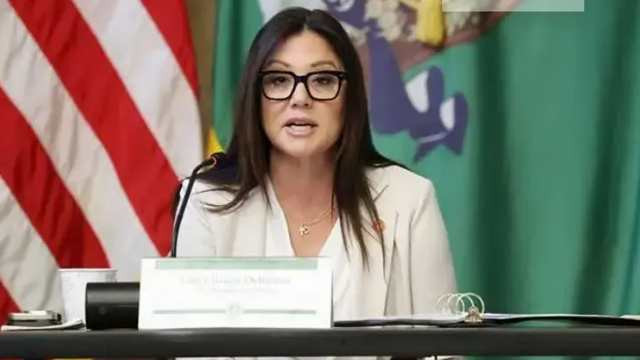
Tulsi Gabbard has become the latest senior official to leave the administration of U.S. President Donald Trump. Her resignation as Director of National Intelligence (DNI) was announced on May 22, following the earlier departures of the Homeland Security Secretary, the Attorney General, and the Labor Secretary over the past three months.
Gabbard said she decided to step down because her husband has been diagnosed with cancer. However, political analysts believe her diminishing influence inside the Trump administration and exclusion from major policy decisions were the main reasons behind her resignation.
Her departure comes at a time when the Trump administration is reportedly considering possible military action against Iran. According to reports, Gabbard had opposed such plans.
A former Democratic congresswoman and military veteran, Gabbard was known for her unconventional foreign policy positions. Her 2017 meeting with Syrian President Bashar al-Assad and her criticism of NATO’s role in the Ukraine war generated controversy in Washington. After leaving the Democratic Party and joining the Republican Party, she became a prominent anti-war voice within Trump’s “MAGA” movement.
Officials familiar with the administration say Gabbard never held substantial influence within Trump’s inner circle. According to multiple sources, she was largely excluded from major national security and military decision-making processes from the beginning.
In January, during a U.S. military operation in Venezuela, Gabbard publicly opposed the action. At the time, she was reportedly on leave, which many observers viewed as a sign of her limited role within the administration.
Despite this, her loyalty to Trump was rarely questioned. During a 2025 intelligence briefing, Gabbard told Congress that Iran was not attempting to build a nuclear bomb. However, after Trump publicly claimed otherwise, she later refused during a Senate hearing to read aloud the portion of her earlier statement contradicting the president’s position.
Gabbard also dismissed two senior intelligence officials after they reportedly prepared an assessment challenging the administration’s claims linking the Venezuelan government to drug trafficking networks.
During her tenure, critics accused the Office of the Director of National Intelligence (ODNI) of becoming smaller in scale while becoming increasingly involved in domestic political matters.
In January, Gabbard was reportedly present in Georgia’s Fulton County when the Federal Bureau of Investigation (FBI) seized ballots during an investigation into the 2020 election. She also reportedly spoke with Trump by phone during the incident. Two months later, she acknowledged that ODNI had seized voting machines in Puerto Rico following allegations of Venezuelan interference in local elections, although no evidence supporting the claims was found.
She also formed a special working group under Trump’s direction to investigate allegations against the administration of former President Joe Biden.
Many professional intelligence officials reportedly welcomed Gabbard’s resignation. Larry Pfeiffer of George Mason University said, “She was never fully suited for the role and never completely understood the responsibilities.”
Analysts believe Gabbard’s resignation signals the declining influence of the anti-war faction inside the Trump administration. In March, Joe Kent also resigned in protest against the possibility of war with Iran.
Meanwhile, officials known for tougher foreign policy positions, including Secretary of State Marco Rubio and John Ratcliffe, are believed to be gaining greater influence within the administration.
Trump, however, denied that Gabbard had been forced to resign. In a post on Truth Social, he wrote, “Tulsi did a fantastic job, and we will miss her.”