২৮ আশ্বিন ১৪৩৩



Youth Voters Set to Play Kingmaker Role in Bangladesh’s 13th National Election
15 January 2026 06:01 AM
NEWS DESK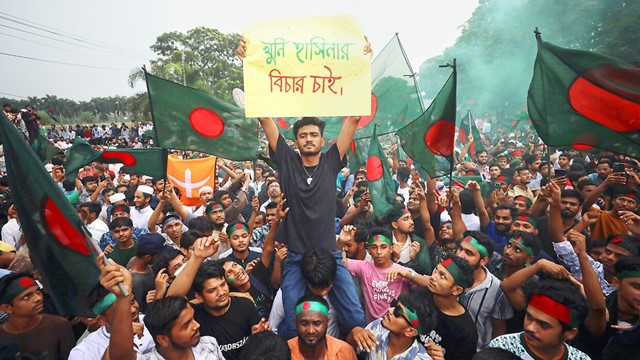
The upcoming 13th National Parliamentary Election is poised to mark a new chapter in Bangladesh’s political history. Shaped by the political realignment following the July mass uprising, expectations of a comparatively inclusive vote after more than a decade, and the unprecedented presence of young voters,
the February 12 election is emerging as one of the country’s most consequential political tests.
At the heart of this election stands the country’s youth—set to emerge as the decisive force or “kingmakers” in determining victory and defeat. After years of disenfranchisement and the addition of millions of first-time voters, nearly 45 million young voters are now preparing to express their political will through the ballot.
According to the Election Commission (EC) and political analysts, if roughly one-third of the electorate—dominated by young voters—turns out actively, the outcome of the election could swing in any direction.
Voter Statistics: The Numerical Strength of Youth
Official data shows that in the 2008 national election, Bangladesh had 81.08 million voters. According to the EC’s updated figures as of November 18, 2025, the total number of voters has risen to 127.7 million, an increase of more than 46 million over 17 years. Of the total electorate, 62.9 million are women.
EC data indicates that voters aged 18 to 35—defined as youth under the National Youth Policy—number approximately 45 million, accounting for nearly one-third of all voters.
A more detailed age-based breakdown shows:
-
18–21 years: over 8.5 million first-time voters
-
22–25 years: about 12 million
-
26–29 years: approximately 12.1 million
-
30–33 years: around 10.6 million
This demographic weight gives young voters the capacity to decisively influence electoral outcomes across constituencies nationwide.
Why Youth Are the Deciding Factor This Time
Although three national elections have been held since 2008, a large segment of today’s youth has never meaningfully participated in voting. Elections in 2014, 2018, and 2024 were marred by political controversy, participation crises, and trust deficits, depriving many young citizens of their first voting experience. For some, now in their 30s, the upcoming election will mark their first opportunity to vote.
Youth participation in the July 2024 mass movement, which ultimately led to the fall of the Sheikh Hasina government in August, has significantly intensified political awareness. Dr Md Abdur Razzaq, Chairman of the Department of Computer Science and Engineering at the University of Dhaka, said voters under 30 are the most influential group this time, driven by a heightened interest in how the state is governed.
Political scientist Professor Mahbubur Rahman of Dhaka University noted that the July uprising fundamentally altered the country’s political landscape. Many young voters were not mere observers—they were active participants, some having lost friends or relatives. As a result, politics has become deeply personal to them, with three core priorities: elections, reforms, and justice.
He added that in the social media era, even student union election results spread nationwide instantly, shaping youth psychology in ways that may be reflected in the national vote.
Former Election Commissioner Jasmin Tuly said the upcoming election represents a continuation of the change witnessed in 2024. “Young voters are ahead of any previous generation in both numbers and political awareness,” she said, urging political parties to understand their expectations.
According to her, many young voters remain undecided, making the election more competitive and unpredictable.
Student Union Elections and Signals for National Politics
Ahead of the national polls, student union elections at five public universities, including the University of Dhaka, saw victories for right-leaning student organizations—sparking debate about shifting youth political attitudes.
Election reform commission chief Dr Badiul Alam Majumdar said whichever direction young voters lean, the election result is likely to follow. However, he cautioned against directly extrapolating national outcomes from campus polls.
Election analyst Abdul Alim echoed the view, stating that while university elections may not mirror national results, the influence of youth voters is undeniable.
What Young Voters Expect from Candidates
Interviews with young voters across the country reveal a preference for rational evaluation over emotional appeals. Their expectations span a wide range of issues:
-
Democracy and freedom of expression – Representation without authoritarian tendencies
-
Employment and merit-based recruitment – Practical job creation plans
-
Campus safety and women’s security – Including cyber safety
-
Religious freedom and minority protection
-
International standing and visa challenges
-
Control of commodity prices and market syndicates
-
Digital rights and internet freedom
-
Education and research funding
-
Corruption-free administration
-
Agriculture and local development
Youth Voters and Bangladesh’s Political Future
Analysts say Bangladesh now has a politically conscious youth population. Social media enables young voters to closely monitor parties and candidates, making decisions increasingly data-driven.
This digitally savvy generation can quickly verify candidates’ past records, financial transparency, and political positions. Those who can move beyond traditional politics to embrace transparency, good governance, and youthful aspirations are likely to gain an edge.
Ultimately, the key to victory or defeat in the February 12 election lies with the youth. As the nation waits, all eyes are on how nearly 40 million young voters will deploy their electoral power—and reshape Bangladesh’s political future.