১ কার্তিক ১৪৩৩



Bangladesh Faces Growing Pressure as US Tightens Visa Policies
18 January 2026 02:01 AM
NEWS DESK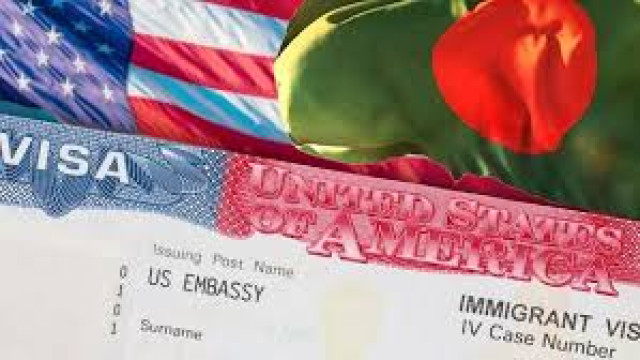
Bangladesh is facing increasing challenges due to a series of restrictive visa decisions by the United States, raising questions about the effectiveness of recent diplomatic engagements between the two countries.
Although the Bangladeshi government claimed that National Security Adviser Khalilur Rahman’s recent visit to the United States was “highly productive,” there has been little reflection of that optimism in Washington’s latest visa measures.
Most recently, the United States announced the suspension of immigrant visa processing for citizens of 75 countries, including Bangladesh. Earlier, Bangladesh was also included in a list of 38 countries whose citizens are now required to pay a “visa bond” ranging from USD 5,000 to USD 15,000 for B-1 and B-2 (business and tourist) visas. As a result, concerns are growing in Bangladesh over mounting barriers to travel and migration to the US.
Former ambassador Munshi Faiz Ahmed criticized the situation, saying expectations were high when the current government took office, with assurances that strong ties with Washington would bring benefits. “Instead, we are seeing the opposite,” he said, questioning the value of recent official visits to the US. He added that further initiatives by the current government could worsen the situation, suggesting that the matter should be left to an elected government after the upcoming elections.
US Suspends Immigrant Visas for 75 Countries
The US State Department announced on Wednesday that immigrant visa processing for nationals of 75 countries—including Bangladesh, Pakistan, Afghanistan, Bhutan, Russia, Iran, Brazil, Kuwait, Somalia, Nigeria, Yemen, and Iraq—will be suspended starting January 21.
In a post on X, the State Department said the decision targets countries whose immigrants are perceived to rely on US public welfare benefits at “unacceptable rates.” Visa processing will remain suspended until the US government is satisfied that new immigrants will not become a burden on public resources. Applications may be rejected if officials believe an applicant is likely to depend on government assistance.
State Department spokesperson Tommy Pigott said the department will exercise its longstanding authority to deny visas to applicants deemed likely to become dependent on public assistance. Immigration from these countries will remain on hold pending a review of the process.
Enamul Haque Enam, founder of NRB World and a US citizen, warned that the decision could also harm the United States. “There is already a severe labor shortage in the US,” he said, adding that the suspension of immigrant visas would worsen the situation. However, he expressed hope that the measure would not be long-lasting.
Expansion of ‘Visa Bond’ Requirement
The Trump administration has also significantly expanded the list of countries whose citizens must pay a visa bond of up to USD 15,000 to enter the United States. According to the State Department’s travel website, the number of countries subject to this requirement has now risen to 38, including Bangladesh. The bond amount—equivalent to about BDT 1.83 million—will be determined at the time of the visa interview and will take effect for most newly added countries from January 21.
Under the new rules, all applicants must attend in-person interviews and submit several years’ worth of social media history, along with detailed travel and residence information for themselves and their family members. Applicants must also submit Form I-352 and agree to bond conditions through the US Treasury’s online payment platform, pay.gov.
US officials argue that the bond system will help ensure that visitors do not overstay their visas. The bond will be refunded if the applicant complies with visa conditions or if the visa application is denied. However, payment of the bond does not guarantee visa approval.
Concerns from Business and Diplomatic Circles
Diplomats and analysts in Bangladesh view the new restrictions as an additional source of pressure. Business leaders argue that the visa bond will discourage travel to the US, particularly for tourists and mid-level professionals.
AKM Afzal ul Monir, managing director of Sinhua Enumilion Industry Limited, described the bond requirement as “humiliating,” calling Bangladesh’s inclusion on the list a source of national embarrassment. BGMEA former director Mohiuddin Rubel warned that tighter visa rules could hurt the ready-made garment sector, which relies heavily on travel between buyers and suppliers in both countries.
Security Adviser’s US Visit Under Scrutiny
National Security Adviser Khalilur Rahman recently visited Washington, DC, to raise concerns about Bangladesh’s inclusion in the visa bond list. During meetings with US Trade Representative Jamieson Greer, he emphasized the growing trade relationship between the two countries and warned that visa bond requirements could hinder business travel and efforts to reduce the trade deficit.
However, less than a week after his visit, news emerged of the suspension of immigrant visa processing, further deepening skepticism about the visit’s impact. Attempts to contact Rahman for comment following the announcement were unsuccessful.
Former ambassador M. Humayun Kabir acknowledged that the US decisions were unfavorable for Bangladesh but expressed hope that the measures would be temporary. He noted that US concerns over welfare dependency—given that a significant portion of Bangladeshi immigrants receive public assistance—may have influenced the decision.
In contrast, American Chamber of Commerce in Bangladesh (AmCham) President Syed Ershad Ahmed offered a more optimistic view, suggesting that the new rules could streamline visa processing for legitimate business travelers and ultimately strengthen trade ties between Bangladesh and the United States.