৮ কার্তিক ১৪৩৩


Who Is Really Running Iran Amid War and Leadership Uncertainty?
26 April 2026 07:04 AM
NEWS DESK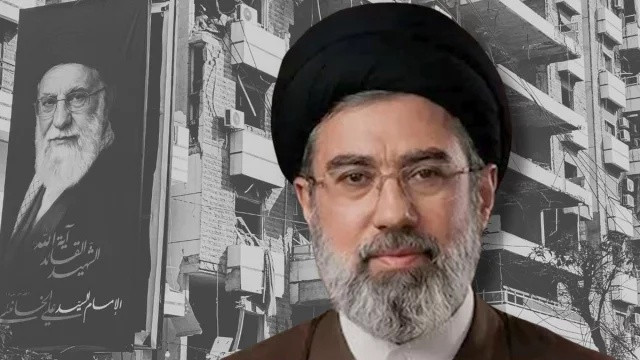
Since the outbreak of war involving Iran, United States, and Israel, one key question has dominated discussion: who is actually in charge in Tehran?
Following the reported death of Iran’s Supreme Leader Ali Khamenei on the first day of the conflict on February 28, his son Mojtaba Khamenei is said to have assumed the role. While he is considered the ultimate authority on paper, the reality appears far more unclear.
U.S. President Donald Trump has described Iran’s leadership as “fragmented.” In contrast, Iranian authorities claimed in a nationwide mobile message that there is no division within the country, insisting that the nation remains united.
Despite taking power, Mojtaba Khamenei has not appeared in public. Apart from a few written directives—including one reportedly related to the Strait of Hormuz—there is little visible evidence of his direct control. A report by The New York Times suggested that he may have been seriously injured in early attacks and is possibly unable to speak due to facial injuries, though this remains unconfirmed.
In Iran’s political system, the Supreme Leader’s influence depends not only on formal authority but also on personal visibility—delivering speeches and mediating between factions. With Mojtaba absent, that channel of communication appears disrupted, contributing to what analysts describe as a growing “decision vacuum.”
Formally, diplomatic responsibilities lie with President Masoud Pezeshkian and Foreign Minister Abbas Araghchi. However, observers say they have limited control over strategic decisions. Recent inconsistencies in Araghchi’s statements regarding the Strait of Hormuz highlight this lack of authority, particularly over military matters.
Instead, Iran’s delegation in ongoing discussions is reportedly being led by Parliament Speaker Mohammad Bagher Ghalibaf, raising further questions about the roles of the president and foreign minister.
Meanwhile, the Islamic Revolutionary Guard Corps (IRGC), under the leadership of Ahmad Vahidi, appears to hold significant influence over both the conflict and strategic decisions, including control over the critical Strait of Hormuz.
Among the current figures, Ghalibaf has emerged as the most visible public leader, participating in both domestic and international engagements and addressing the nation. Although he presents himself as aligned with the Supreme Leader, there is no clear evidence of direct coordination with Mojtaba Khamenei, leaving his position somewhat uncertain.
While Iran’s administrative system has not collapsed, it is clearly under strain. The absence of a visible Supreme Leader, the limited authority of the president, and the dominance of military forces have created a complex and uncertain decision-making environment.
Despite holding powerful strategic leverage—such as control over the Strait of Hormuz—questions remain about whether Tehran can effectively translate that into political advantage. For now, Iran appears to be maintaining its defensive posture, but internal fragmentation may signal deeper challenges ahead.