২৩ আশ্বিন ১৪৩৩



US Seizes Oil Tankers from Venezuela, Russia and Iran
09 January 2026 05:01 AM
NEWS DESK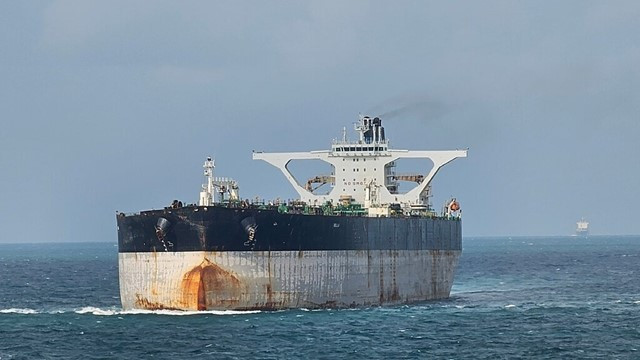
The United States has seized a Russian-flagged oil tanker in the North Atlantic following a dramatic weekslong chase on the high seas.
The operation to seize the sanctioned vessel, which changed its name from the Bella 1 to the Marinera after fleeing the American blockade of Venezuela last month, was carried out early Wednesday. The U.S. also announced the seizure of another sanctioned tanker, the M/T Sophia, which it said was “conducting illicit activities in the Caribbean Sea.”
The Kremlin, a strong supporter of deposed President Nicolás Maduro, accused the U.S. of violating maritime law by seizing the Marinera.
The ship's efforts to evade authorities were followed in real time by a fleet of observers and analysts, who also tracked as the U.S. moved military assets to the United Kingdom in recent days.
The saga emerged as a new flashpoint between Washington and Moscow that threatened to undermine the Trump administration’s blockade of the Latin American country in the wake of its stunning attack and capture of Maduro.
U.S. European Command confirmed the seizure of the Marinera for violating U.S. sanctions. “The vessel was seized in the North Atlantic pursuant to a warrant issued by a U.S. federal court after being tracked by USCGC Munro,” it said in a post on X.
Secretary of State Marco Rubio told reporters on Capitol Hill that the tankers were seized as part of "stabilization" efforts for Venezuela.
He said that the interim authorities in Venezuela "understand the only way they can move oil, generate revenue and not have economic collapse is if they cooperate and work with the United States."
U.S. Southern Command, which oversees military activities in Latin America and the Caribbean, announced on X that the U.S. had also apprehended M/T Sophia, “a stateless, sanctioned dark fleet motor tanker” that it said was “operating in international waters and conducting illicit activities in the Caribbean Sea.”
Emmanuel Belostrino, an oil market analyst at Kpler, said satellite imagery and port reports indicate the Sophia was “laden with around 2 million barrels of Merey crude oil, loaded from Jose Oil Terminal (JOT)” in Venezuela. Kpler, which runs the ship-tracking service MarineTraffic, said the Sophia's involvement in sanctioned trade may extend back several years.
Homeland Security Secretary Kristi Noem called the operations “two safe, effective boardings within hours of each other.” Noem said that the Bella 1 had been trying to evade the Coast Guard for weeks, “even changing its flag and painting a new name on the hull while being pursued, in a desperate and failed attempt to escape justice.” The “heroic” crew of USCGC Munro, she added, pursued the vessel “across the high seas and through treacherous storms.”
The U.S. seized two oil tankers off the coast of Venezuela last month as part of its blockade of sanctioned oil shipments to and from the country. The Marinera was one of a number of sanctioned oil tankers operating near Venezuela that have recently changed their flags to Russia.
Trump said Tuesday that Venezuela would hand over 30 million to 50 million barrels of oil to the U.S., as its vast reserves emerged as a key pillar of his plans — and a point of tension with Russia and China.
NBC News reported last month that the Marinera, then known as the Bella 1, had been on the U.S. sanctions list since June 2024.
It was pursued by the U.S. Coast Guard off Venezuela last month, and as of Jan. 5 it was off the west coast of Scotland in the North Atlantic, according to data from the ship-tracking website MarineTraffic.
Russia's Transport Ministry said in a statement following the tanker's capture that the Marinera had been granted temporary authorization to sail under the Russian flag in late December, and that it had lost all communication with the ship after U.S. forces boarded it on Wednesday.
"The high seas are governed by the principle of freedom of navigation, and no state has the right to use force against vessels duly registered under the jurisdiction of other states," it said.
The Russian Foreign Ministry told state news agency Tass it was closely monitoring the situation and demanded the humane treatment and "prompt return" of Russian citizens onboard.
“The boarding of American military personnel on a peaceful vessel on the high seas and its actual capture, as well as the capture of the crew, cannot be interpreted as anything other than a gross violation of the fundamental principles and norms of international maritime law, as well as freedom of navigation,” the ministry said Thursday.
“Washington’s readiness to generate acute international crisis situations is a cause for regret and concern, given the already severely strained Russian-American relations burdened by disagreements over the past years,” it added.
Chairman of the State Duma Committee on International Affairs Leonid Slutsky told Tass the seizure was "unquestionably a violation of maritime law and UN conventions," while Senator Andrei Klishas, of the Putin-aligned United Russia party, said on Telegram that the U.S. had “turned to outright piracy on the high seas.”
White House press secretary Karoline Leavitt said at a news briefing that the Marinera was "deemed stateless" after "flying a false flag." She said the crew would be subject to prosecution under U.S. law and "will be brought to the United States for such prosecution if necessary."
Pressed about whether the seizure would inflame tensions with Russia, Leavitt said that Trump had an "open, honest and good" relationship with Vladimir Putin but that he would "enforce our policy that's best for the United States of America, and with respect to these ship seizures, that means enforcing the embargo against all dark fleet vessels."
Russian propaganda TV channel RT shared what it said was exclusive footage from aboard the tanker Tuesday night. It did not say where or when the footage was shot.
“Visibility is poor due to fog, and a U.S. Coast Guard ship is visible in the distance,” the caption accompanying the video read, adding that American reconnaissance aircraft were monitoring the vessel.
Flight tracking data shows that 13 Air Force C-17A Globemaster III, a large military transport aircraft, flew from U.S. Air Force bases to the U.K. between Saturday and Monday.
As news of the tanker’s seizure broke, flight records showed multiple U.S. military aircraft near the vessel’s last known location.
Two U.S. Navy P-8A Poseidon aircraft, typically used for maritime patrols, and a KC-135 Stratotanker aerial refueling tanker were recorded flying off the west and north coasts of Scotland. Two C-130J Hercules tactical transport aircraft and three U-28A Draco special operations aircraft were also recorded flying in the area.
The U.K.’s defense ministry said in a statement that Britain had “provided enabling support” to intercept the Marinera, including “pre-planned operational support” and “surveillance support from the air.”
It cited assessments that the vessel had been “involved in illegal activity, linked to international terrorism and crime including Hezbollah, and part of the web of rising shadow activity that fuels and finances nefarious activity across the globe.”
But the seized tankers are not the only ones threatening to undermine the U.S. blockade.
At least three other sanctioned oil tankers that were operating near Venezuela in recent weeks have changed their flags to Russia, according to the Russian Maritime Register of Shipping. The ships — the Malak, now renamed the Sintez; the Dianchi, now the Expander; and the Veronica, now the Galileo — had previously been sailing under the flags of Comoros and Guyana, according to MarineTraffic.